Dr. Canary
What should an automotive BDC quality check measure?
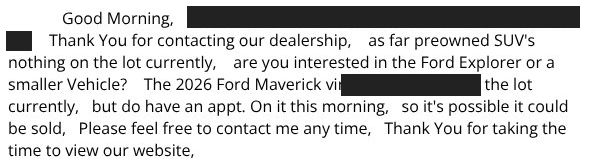
For a sales business development center, review whether the sequence helps the shopper decide: relevant inventory, verified offer details, clear trade-in requirements, and a useful next step. Check what each later touch adds and how the team responds to engagement. Response time belongs alongside these checks.
Your next check.
0 / 6Use this while you test. Checks stay on this page until you reload.
The BDC review sheet
Sales BDC conversation review
Shopper intent: [vehicle, offer, trade-in, next decision]
Original request and promise: [exact wording]
Window and available channels: [start, end, email, SMS, call notes]
For each touch: [time, sender, answer or new value, open question]
Supporting material: [link, quote, photo, file; relevance and result]
Response timing: [acknowledgment, useful answer, promised update]
Customer engagement: [reply, booking, preference change, decline]
Next touch adapted: [evidence or unobserved]
Handoff: [owner, prior context, open commitment, confirmation]
Team-record outcome: [appointment, attended visit, sale, or unknown; same inquiry and record source]
Coaching and retest: [specific change, owner, result]
Coach for the decision the shopper is making.
An inventory inquiry needs a checked availability answer and relevant options. An offer inquiry needs the actual eligibility and terms. A trade-in request needs a clear distinction between an online estimate and a dealer offer, including any inspection or information still required.
A necessary clarification can be useful progress. Review the response against what was reasonable at that point, with a named owner and a credible next update for anything still open.
Give every later touch a job.
Lay out the observed emails, texts, available call notes, and customer replies in time order. Mark what each touch adds: an answer, new material, a relevant alternative, coordination, or repetition. Check gaps against promised updates rather than imposing one universal cadence.
After a reply, look for evidence that the team listened. After an appointment, check whether the sequence switches to preparation. After a decline or opt-out, check the agreed stop handling. Avoid duplicate asks from a salesperson and an automated sequence.
Help the shopper choose, then prepare the visit.
Use the shopper’s priorities to choose useful material: a feature walkaround, a comparison with an available alternative, ownership information, or preparation for an appraisal. Explain what it helps them decide. Open the actual file or link and check the vehicle, terms, rendering, and action.
Before the visit, confirm the agreed vehicle, person, time, and preparation. Preserve earlier answers in the handoff. Connect the same inquiry to the team’s appointment, attendance, and sale records where available. A no-show needs an appropriate next conversation; a delivered vehicle needs a clear introduction to service.
Run your numbers.
Use the sales calculator to explore a scenario using your own inputs.
Open the calculator ↗